
Enter Your Email to Be Notified When Discounted Tickets Become Available
Enter Your Email to Be Notified When Discounted Tickets Become Available

What if abundance has been closer than you think…
…but part of you has been quietly pushing it away?
Not consciously.
Not intentionally.
Not because you do not want more money, freedom, ease, or opportunity.
But because somewhere beneath the surface, your mind may not yet feel safe receiving it.
You may say you want more abundance.
You may want better opportunities.
More financial breathing room.
More peace around money.
More freedom to live, give, and create without constantly feeling restricted.
But somehow, the same pattern keeps repeating.
The opportunity appears, and you hesitate.
The money comes in, and it disappears.
The idea shows up, and you talk yourself out of it.
The next level becomes visible, and suddenly you feel uncomfortable.
If that sounds familiar, this article is not here to judge you.
It is here to help you see something that may have been happening quietly in the background:
You can consciously desire abundance while subconsciously resisting it.
And once you can see the pattern, you can begin to change it.

Have you ever had someone say to you: “I don’t know why, but I just feel better after talking to you.”
Maybe it was a friend going through a hard season.
A coworker who felt overwhelmed.
A family member who needed someone to listen.
Or someone who trusted you with something they could barely say out loud.
You didn’t have a script.
You didn’t have a formal process.
You simply listened. You asked a thoughtful question. You helped them see something they couldn’t see before.
And by the end of the conversation, they looked lighter.
More hopeful.
More grounded.
More like themselves again.
And maybe a quiet thought moved through your mind: “This feels meaningful.”
If that has ever happened to you, it may not be random.
Maybe your natural gift for helping people is trying to become something more.
Maybe it is not just a personality trait.
Maybe it is a skill waiting to be developed.

Two people walk into the same meeting.
The manager looks at both of them and says:
“I need to talk to you later.”
One person nods, finishes their work, and barely thinks about it again.
The other feels their stomach tighten.
Their mind starts racing.
Did I make a mistake?
Am I in trouble?
Did someone complain about me?
For the next three hours, they replay every conversation, every email, every decision they made that week.
Same manager.
Same words.
Same event.
Completely different emotional experience. Why?
Because we do not simply respond to what happens.
We respond to what our mind believes it means.
And understanding that one idea can completely change the way you see yourself, your relationships, and the way your mind works.

Have you ever sat across from someone you care about and felt the ache of wanting to help them more deeply?
Maybe they were afraid.
Maybe they felt stuck.
Maybe they were repeating the same painful pattern again and again.
You listened.
You encouraged them.
You reminded them of their strength.
And still, part of you could sense it:
Something deeper needed to shift.
If you are someone people naturally come to for guidance, you already know this feeling.
You care.
You see potential.
You want others to feel free, confident, calm, and capable.
But caring deeply does not always mean you have the tools to create lasting transformation.
That is where hypnosis becomes more than an interesting concept.
For helpers, coaches, healers, leaders, and growth-minded people, hypnosis can become a practical tool for helping others create change at the level where many patterns actually live: the subconscious mind.

There comes a point after NLP Practitioner Training when something begins to shift.
At first, you’re excited by what you learned.
The techniques.
The language patterns.
The reframes.
The anchors.
The new understanding of how the mind works.
You realize NLP is not just another personal development tool. It changes the way you think, communicate, respond, and help others create transformation.
But then, after some time, another feeling may begin to surface.
A quiet inner knowing.
You understand NLP… but you sense there is more.
More depth.
More precision.
More embodiment.
More integration.
You may not be looking for “more information.” You may be ready for the next level of who you become through the work.
That is often the moment when NLP Master Practitioner begins calling.
Not as a casual next step. But as a deeper commitment to mastery.
If you’ve completed NLP Practitioner Training and you’ve been wondering whether now is the time to move forward, here are seven signs you may be ready to move beyond Practitioner level.

Have you ever looked at your life and thought… “I should be grateful… so why do I still feel like something is missing?"
Maybe nothing is obviously wrong.
You have responsibilities.
You have routines.
You show up.
You do what needs to be done.
From the outside, your life may even look fine.
But inside, there is a quiet restlessness.
A part of you knows you are capable of more.
A part of you knows you are meant to feel more alive than this.
A part of you keeps whispering, “This cannot be all there is.
That feeling is not random.
It may be the emotional weight of living below your potential.
And if you have felt it, it does not mean you are ungrateful. It does not mean you are broken. It may simply mean there is a deeper version of you trying to emerge.

Have you ever felt like you’ve read the books, listened to the podcasts, watched the videos, and tried to stay positive…
…but somehow, you still find yourself repeating the same patterns?
You want to grow.
You want to feel more confident.
You want to respond differently.
You want to stop overthinking, stop doubting yourself, and stop falling back into the same emotional habits.
And yet, when life happens, the old version of you shows up again.
The same reaction.
The same fear.
The same inner voice.
The same pattern you thought you were done with.
If that sounds familiar, here’s something important to understand:
You are not lazy.
You are not broken.
You are not failing at personal growth.
You may simply be missing a practical way to work with the mind.
And that is where one beginner-friendly personal growth tool can open a whole new path.
It’s called Neuro-Linguistic Programming, or NLP.

Have you ever watched someone change their life and quietly wondered:
Why does it seem to click for them… but not for me?
They seem to shift.
To grow.
To move forward.
They break old patterns.
They become more confident.
They create results that once felt out of reach.
Meanwhile, you may feel like you are still circling the same struggles.
The same emotional reactions.
The same habits.
The same disappointments.
The same version of yourself you were hoping would be different by now.
If you have ever felt that tension, you are not alone.
And more importantly, it does not mean there is something wrong with you.
Because the real reason some people transform and others stay stuck is not what most people think.
It is not just discipline.
It is not just motivation.
And it is not just how badly they want it.
The real difference goes much deeper.

What if one of the most calming healing tools available to you was already with you… right now?
Not in a clinic.
Not in a prescription bottle.
Not in a complicated system that you need weeks to understand.
But in your own hands.
For so many people, stress does not just stay in the mind.
It settles into the body.
It becomes tension in the shoulders, heaviness in the chest, knots in the stomach, or an anxious feeling that never fully leaves.
You may look fine on the outside.
You may still be functioning.
You may still be doing what needs to be done.
But inside, you know something feels off.
There is pressure.
There is emotional weight.
There is something you have been carrying longer than you should have had to.
And if that is where you are, here is the good news:
Healing does not always have to be hard.
Sometimes it begins with something much gentler.
Sometimes it begins with learning how to work with your body instead of against it.
And sometimes, the first step back to peace is quite literally in your own hands.
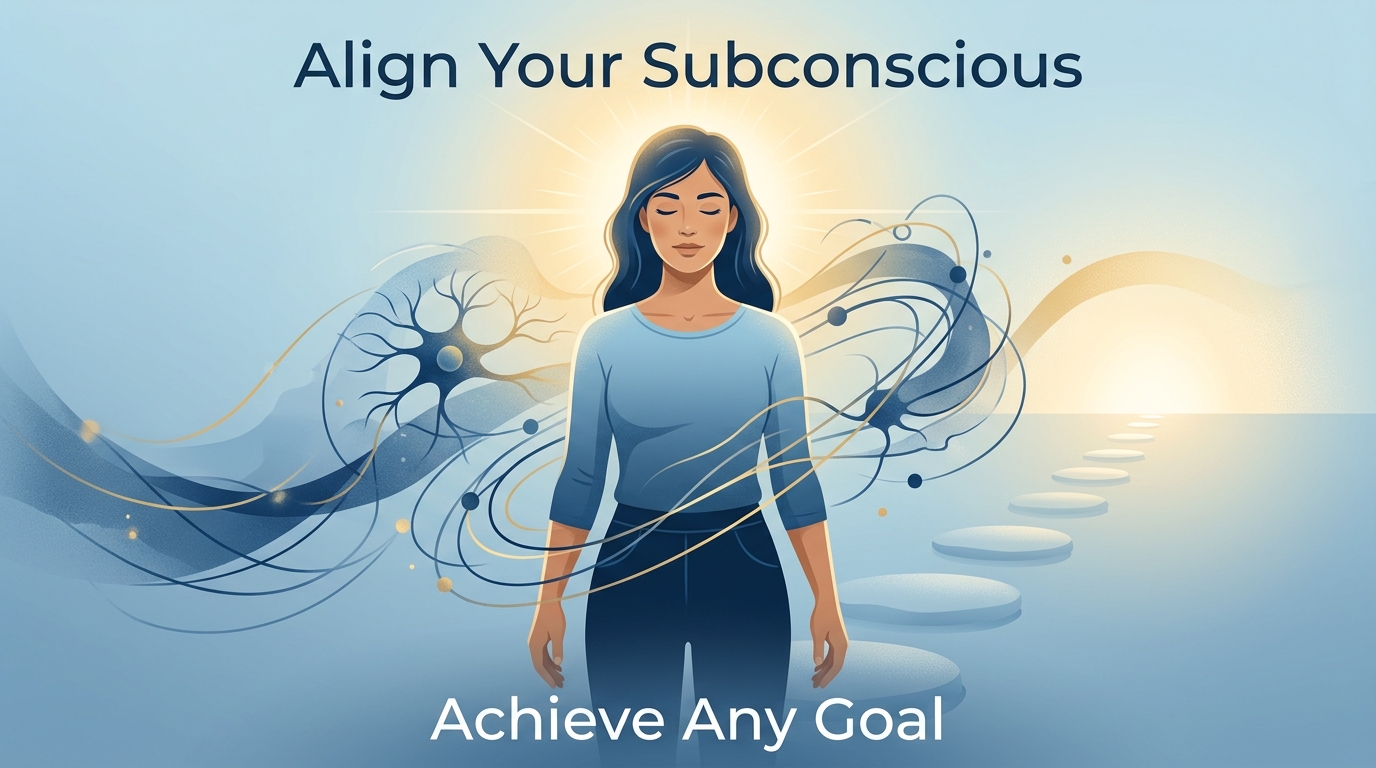
You start with clarity.
A new goal.
A fresh plan.
A strong sense of motivation.
This time feels different.
You tell yourself: “I’m really going to do it this time.”
And for a while… You do.
You take action.
You feel momentum.
You see progress.
But then something shifts.
You slow down.
You lose focus.
You hesitate.
Days pass. Then weeks.
And before you know it… You’ve stopped.
Again.
Now you’re left with something familiar: Frustration. Guilt. Disappointment.
And the question that quietly lingers: “Why does this keep happening… even when I really want it?”
This Blog
Subscribe
Bookmark This Page
Recent Posts
Recent Posts
Categories
