
Enter Your Email to Be Notified When Discounted Tickets Become Available
Enter Your Email to Be Notified When Discounted Tickets Become Available
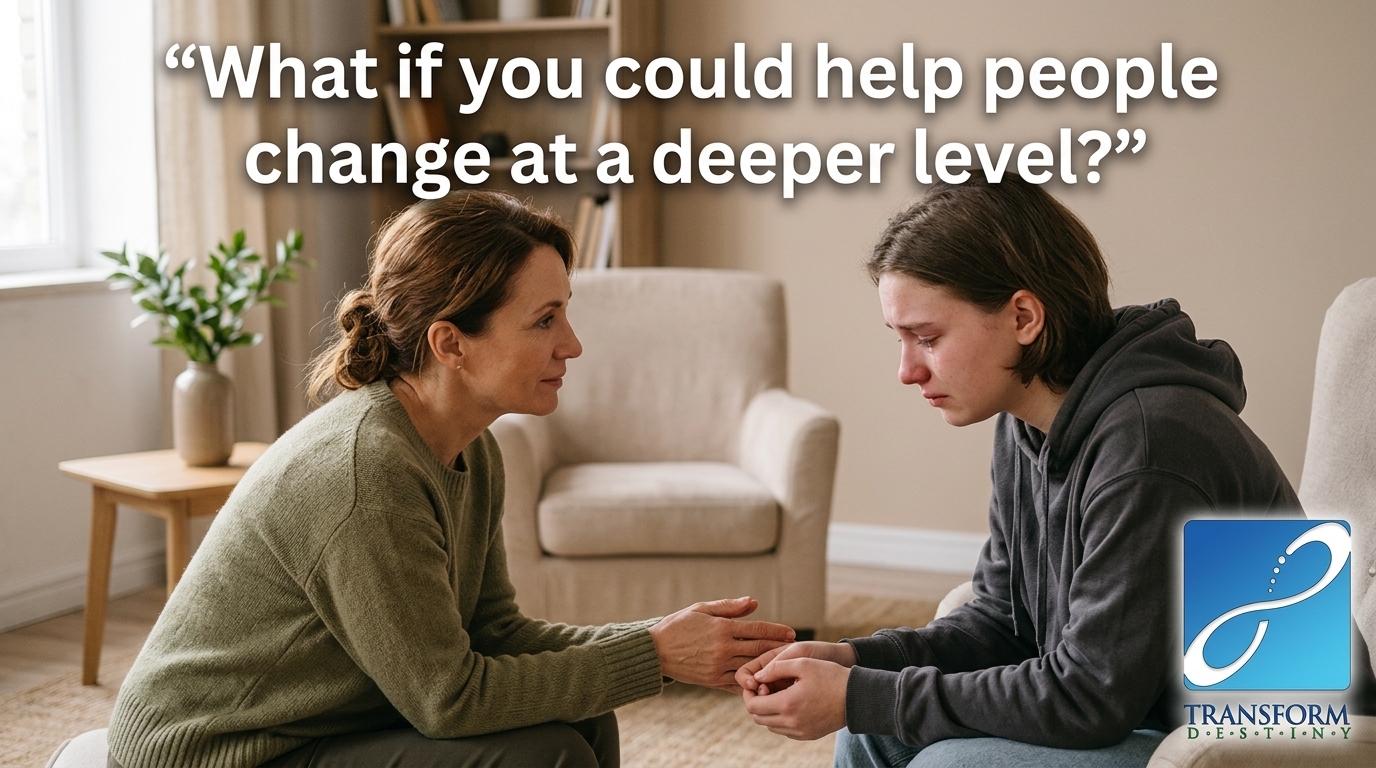
Have you ever sat across from someone you care about and felt the ache of wanting to help them more deeply?
Maybe they were afraid.
Maybe they felt stuck.
Maybe they were repeating the same painful pattern again and again.
You listened.
You encouraged them.
You reminded them of their strength.
And still, part of you could sense it:
Something deeper needed to shift.
If you are someone people naturally come to for guidance, you already know this feeling.
You care.
You see potential.
You want others to feel free, confident, calm, and capable.
But caring deeply does not always mean you have the tools to create lasting transformation.
That is where hypnosis becomes more than an interesting concept.
For helpers, coaches, healers, leaders, and growth-minded people, hypnosis can become a practical tool for helping others create change at the level where many patterns actually live: the subconscious mind.
Some people are naturally wired to help.
They listen differently.
They notice when someone is holding back.
They feel fulfilled when someone has a breakthrough.
They see possibility in others even when those people cannot yet see it in themselves.
You may not call yourself a healer.
You may not think of yourself as a coach.
You may simply be the person others trust when life feels heavy.
But if you have ever felt energized by helping someone feel clearer, calmer, or more empowered, there is something in you that is drawn to transformation.
Some people do not just want to succeed.
They want to help others become free.
And that desire is powerful.
But at some point, every helper reaches a moment where compassion alone does not feel like enough.
You want more than good advice.
You want a method.
You want a way to help people shift from the inside out.
Advice has its place.
Encouragement matters.
Reassurance can be comforting.
Logic can help someone see a situation differently.
But many people already know what they “should” do.
They know they should stop smoking.
They know they should feel more confident.
They know they should let go of fear.
They know they should stop procrastinating, stop overthinking, or stop repeating the same old pattern.
And yet, knowing does not always create change.
Why?
Because advice speaks mostly to the conscious mind.
But many struggles are rooted deeper.
The conscious mind may understand the solution, while the subconscious mind continues running the old pattern.
That is why someone can say, “I know this fear doesn’t make sense,” and still feel afraid.
It is why someone can know they are capable and still feel inadequate.
It is why someone can want change and still resist it.
If the conscious mind were enough, people would change the moment they understood the problem.
But real transformation often requires a deeper level of work.
The subconscious mind stores far more than most people realize.
It holds habits.
Emotional responses.
Automatic behaviors.
Fears.
Associations.
Limiting beliefs.
Old decisions about what is safe, possible, or allowed.
Many people are not resisting change because they are weak.
They are repeating patterns their subconscious mind learned to protect them.
For example:
Someone may consciously want success, but subconsciously associate visibility with judgment.
Someone may want calm, but their nervous system has learned to expect danger.
Someone may want confidence, but deep down, they still expect rejection.
Someone may want to move forward, but part of them is still organized around an old emotional wound.
This is why helpers need tools that go beneath the surface.
Because when you can work with the subconscious mind, you are not just helping someone think differently.
You are helping them experience themselves differently.
And that is where change becomes powerful.
Many people misunderstand hypnosis.
They imagine stage shows, loss of control, or someone being made to do something against their will.
But therapeutic hypnosis is not mind control.
It is not sleep.
It is not manipulation.
It is not forcing someone into something they do not want.
Hypnosis is a focused, relaxed state where the mind becomes more open to positive suggestion, new perspectives, and internal change.
You have likely experienced light hypnotic states before.
When you are absorbed in a movie.
When you drive somewhere familiar and realize you were not consciously thinking about every turn.
When you get lost in a story.
When a calming voice helps you relax.
Hypnosis uses this natural ability of the mind intentionally.
Not to control people.
But to help the mind become more receptive to change.
And for helpers, that makes hypnosis incredibly practical.
Hypnosis gives helpers a way to move beyond encouragement and into guided transformation.
Here are several ways it can help.
People change more easily when they feel safe.
When someone is anxious, defensive, overwhelmed, or emotionally guarded, it can be difficult for them to access new possibilities.
Hypnosis helps calm the nervous system.
It creates a relaxed state where the mind can soften, resistance can decrease, and the person can begin to explore change from a place of greater inner safety.
Before transformation happens, the mind must feel safe enough to change.
Hypnosis helps create that space.
Many people are trapped in analysis.
They think about the problem.
They talk about the problem.
They understand the problem.
But they remain stuck.
This often happens because the conscious mind keeps analyzing, defending, and looping.
Hypnosis helps quiet that mental noise.
It allows someone to move beyond overthinking and access deeper inner resources.
This can be especially useful for people who intellectually understand what is wrong but still feel emotionally blocked.
Sometimes, what people need is not more analysis.
They need access to a calmer, deeper part of the mind.
Many struggles are shaped by hidden beliefs.
Beliefs like:
“I am not safe.”
“I am not good enough.”
“I cannot change.”
“I do not deserve this.”
“I always fail.”
These beliefs may not be logically true.
But if the subconscious mind accepts them, they can shape behavior, emotion, and identity.
Hypnosis allows helpers to guide people toward more empowering internal beliefs.
Not by forcing someone to accept something against their will.
But by helping them become more receptive to the beliefs they actually want to live from.
Beliefs like:
“I can trust myself.”
“I am capable of change.”
“I can release this old pattern.”
“I am safe enough to move forward.”
When those new beliefs begin to land at a deeper level, behavior can begin to shift naturally.
Some emotions are not stored neatly in conscious memory.
They live in the body.
In reactions.
In tension.
In patterns that show up again and again.
Hypnosis can help people gently access and release emotional patterns without needing to force or relive everything intensely.
This is one reason hypnosis can feel so powerful.
It does not always require someone to fight their way through change.
It can help them relax into a new inner experience.
A new meaning.
A new sense of freedom.
Lasting transformation is not just about changing one behavior.
It is about helping someone see themselves differently.
From afraid to capable.
From stuck to empowered.
From reactive to calm.
From doubtful to confident.
Hypnosis can help reinforce identity-level change by guiding the subconscious mind toward a new inner image of who the person is becoming.
That matters because people tend to live from who they believe they are.
When identity shifts, choices shift.
And when choices shift, life begins to change.
Hypnosis is not just useful in formal therapy rooms.
It can be valuable for many types of helpers.
Coaches can use hypnosis-based skills to help clients move beyond limiting beliefs and internal resistance.
Healers and wellness professionals can use hypnotic relaxation to support emotional release and inner calm.
Parents can use gentle language, stories, and guided relaxation to help children feel safe and confident.
Leaders can use calming communication and focused suggestion to help people move from stress into clarity.
Everyday helpers can learn how to guide someone into a more resourceful state instead of only offering advice.
Hypnosis gives helpers a way to move from “I hope this helps” to “I have a process that can guide change.”
That is a powerful shift.
Hypnosis is not just a script.
It is a skill.
And like any transformational skill, it becomes more powerful when you experience it, practice it, and receive feedback.
In a live training environment, you can:
Hear demonstrations
Practice guiding others
Experience being guided
Learn how to create trust and safety
Build confidence in real time
Ask questions as they arise
Receive correction and support
You can read about hypnosis.
But live training helps you feel the rhythm, timing, presence, and confidence required to guide someone effectively.
That is where the skill begins to become embodied.
And embodiment matters.
Because when you are guiding someone into change, your presence is part of the process.
If you feel called to help others and want a practical tool that goes beyond advice, Learn Hypnosis… Live! may be a powerful next step.
This training is designed for people who want to learn how to guide real transformation using hypnosis in a safe, structured, hands-on environment.
You do not need prior hypnosis experience.
You do not need to already be a therapist or coach.
You simply need the desire to learn, the willingness to practice, and the heart to help others change.
For coaches, healers, helpers, growth-minded professionals, and people who want to become Certified Clinical Hypnotherapists, this live training can open a new doorway.
Not just into learning hypnosis.
But into becoming someone who can help others access change more deeply.
Maybe your desire to help others is not random.
Maybe the reason people open up to you is because they sense something steady in you.
Maybe your next step is not simply to care more.
Maybe it is to become more equipped.
Because when compassion meets skill, transformation becomes possible.
And if you are ready to turn your natural desire to help into a practical, powerful transformation skill, explore Learn Hypnosis… Live!
It may be the next step in becoming the kind of helper who does more than encourage change.
You can learn how to guide it.
Tags: Coaching Skills, Emotional Change, Helping Others, Hypnotherapy Training, Learn Hypnosis, LHL, Subconscious Mind, Transformation Tools
Michael is a best-selling author, business coach, success coach, and international speaker with impressive credentials and experience.
He has helped nearly 200,000 people around the world learn to use the power of the mind to turn off the "autopilot," take hold of the controls, and create the life of their dreams.
Michael started Transform Destiny in the year 2000 with a deep passion for helping people transform their individual destinies, after transitioning from an unsatisfying field in computer programming.
Now, he heads Transform Destiny, the top NLP, hypnotherapy, and coaching training company in the world, and our trainers teach these valuable skills all over The United States of America, as well as other countries.
You can read more about Michael on his bio page.

More about Michael
This Blog
Subscribe
Bookmark This Page
Recent Posts
Recent Posts
Categories
