
Enter Your Email to Be Notified When Discounted Tickets Become Available
Enter Your Email to Be Notified When Discounted Tickets Become Available

Have you ever told yourself not to worry, only to find your mind replaying the same thoughts over and over again?
Perhaps you've felt nervous before an important conversation, struggled to let go of a frustrating experience, or wished you could respond more calmly when life doesn't go as planned.
You understand that worrying won't help. Yet somehow, your emotions don't always follow what you know logically.
What if you could learn a different way to work with those feelings?
That's where Emotional Freedom Techniques, commonly known as EFT or EFT tapping, come in.
In this beginner's guide, you'll discover what EFT tapping is, how the technique works, and how you can explore this practice as part of your personal development journey.
Emotional Freedom Techniques (EFT) is a self-help technique that combines focused attention on a particular concern with gentle tapping on selected points of the body.
Think of it as giving yourself a structured moment to acknowledge what you're feeling instead of automatically pushing that feeling away.
Rather than simply telling yourself to calm down, you deliberately focus on a specific emotion or situation while following a sequence of tapping points.
People explore EFT for different reasons, including everyday stress, nervousness, emotional self-awareness, and personal development.
For example, imagine you're about to speak during a meeting. You know your material, but your palms feel sweaty, your thoughts start racing, and you wonder what everyone will think.
You could try ignoring those feelings. Or you could pause, acknowledge your nervousness, and explore a technique designed to help you focus on what you're experiencing.
EFT offers one structured approach to doing that.
It isn't a magic solution, and it doesn't work the same way for everyone. But understanding the practice can help you decide whether it's something you'd like to explore.

You set the goal because you wanted something better.
More freedom. A successful business. A healthier body. A career you're proud of. A life that feels more meaningful.
At first, the goal excited you. You imagined what your life might look like once you achieved it. You felt motivated, hopeful, and ready to make a change.
But somewhere along the way, that excitement began turning into pressure.
Instead of feeling inspired, you started feeling behind. Instead of celebrating your progress, you focused on everything you hadn't accomplished. And instead of feeling closer to the future you imagined, you began wondering whether you'd ever get there.
Why do the goals that once inspired us sometimes become the very things that frustrate us?
The answer may have less to do with how badly you want something and more to do with how you're approaching the journey.
Understanding this difference can help you pursue meaningful goals with greater clarity, more realistic expectations, and less unnecessary pressure.
This may sound familiar.
You decide to improve your health, so you create a new exercise routine. You want to grow your business, so you map out an ambitious plan. You want to develop a new skill, so you promise yourself you'll practice every day.
For a while, everything feels possible.
Then life happens.
You miss a workout. An unexpected expense disrupts your plans. A project takes longer than expected. You make less progress in a month than you hoped to make in a week.
Suddenly, the goal that once excited you becomes a reminder of everything you're not doing.
You start thinking, I'm falling behind.
Maybe you tell yourself you need more discipline. Perhaps you decide you're not trying hard enough.
But what if the problem isn't simply a lack of motivation?
What if your expectations, your plan, or the meaning you've attached to the goal are making the process harder than it needs to be?
If you've experienced this, you're not alone. And you don't necessarily need to abandon your ambitions to change the experience.

You’ve worked hard. You’ve grown. You’ve accomplished things that an earlier version of you may have once thought were impossible.
So why can it still feel like you’re not good enough?
Why can someone praise your work and, within seconds, your mind finds a reason the compliment doesn’t really count?
Why can you achieve the goal, get the opportunity, earn the recognition, and still wonder whether you truly deserve to be there?
If you’ve ever experienced this disconnect between what you’ve accomplished and how you feel about yourself, there may be more happening beneath the surface than a simple lack of confidence.
And understanding that difference could change the way you see yourself.
This is for you if you’ve accomplished meaningful things, yet somehow still feel less capable than other people seem to think you are.
It’s for you if you keep raising the bar because reaching the last goal never created the confidence you expected.
And it’s for you if you can easily recognize someone else’s strengths while struggling to fully acknowledge your own.
This isn’t about pretending you’re perfect.
It isn’t about convincing yourself that you never need to improve.
It’s about understanding why your internal picture of yourself may not have caught up with the person you’ve already become.

What if the reason you can't truly relax isn't because you're too busy… but because your mind never learned how to stop working?
Think about the last time you finally finished your day.
You closed your laptop.
You sat on the couch.
You made yourself a cup of coffee or tea.
Your body was finally still.
But your mind?
It was replaying that conversation from this afternoon.
Remembering an email you forgot to send.
Planning tomorrow's schedule.
Wondering if you made the right decision.
Thinking about something you should have said.
Before long, what was supposed to be a moment of rest felt just like another hour of work.
If you've ever experienced that, you're far from alone.
And here's the encouraging news:
Your busy mind doesn't necessarily mean something is wrong with you.
It may simply mean your mind is carrying far more than it was ever designed to hold.

What if you could help people say yes without pressuring them, pushing them, or making them feel controlled?
What if your conversations could feel calmer, cleaner, and more effective?
What if you could guide someone toward a better decision while still honoring their freedom, intelligence, and values?
That is what ethical influence is really about.
It is not about tricks.
It is not about control.
It is not about forcing someone to do what they do not want to do.
True influence is about trust.
It is about helping people feel safe enough to listen, open enough to consider, and clear enough to choose.
And if you have ever struggled to get your message across without sounding pushy, this may be the communication shift you have been looking for.
This is for people who want to communicate more powerfully without sounding salesy.
It is for coaches, business owners, leaders, helpers, speakers, and professionals who care about being effective, but do not want to pressure people.
It is for people who have good ideas, valuable offers, or meaningful insights, but sometimes struggle to get buy-in.
And it is for people who want to guide, sell, teach, coach, or lead with integrity.
This is for people who believe influence should be built on respect.
Because the best kind of influence does not make people feel smaller.
It helps them access a better decision from within themselves.

Have you ever had a quiet moment, maybe during your commute, maybe in the middle of a meeting, maybe when you finally sat down at night, where something inside you whispered… “There has to be more than this.”
Not because your life is bad. Not because you’re ungrateful.
But because somewhere deep within you, there’s a part that knows you’re meant for something more meaningful. Something more aligned. Something more for you.
If you’ve ever felt that pull, even for a moment, this article is for you.
Today, we’re going to explore the signs that you may be called to a purpose-driven career, a path where your work feeds your soul, your growth becomes part of your identity, and the impact you make ripples outward into the lives of others.
This isn’t about throwing away your life or quitting your job tomorrow.
This is about listening closely to that inner voice… and finally understanding what it’s been trying to tell you.
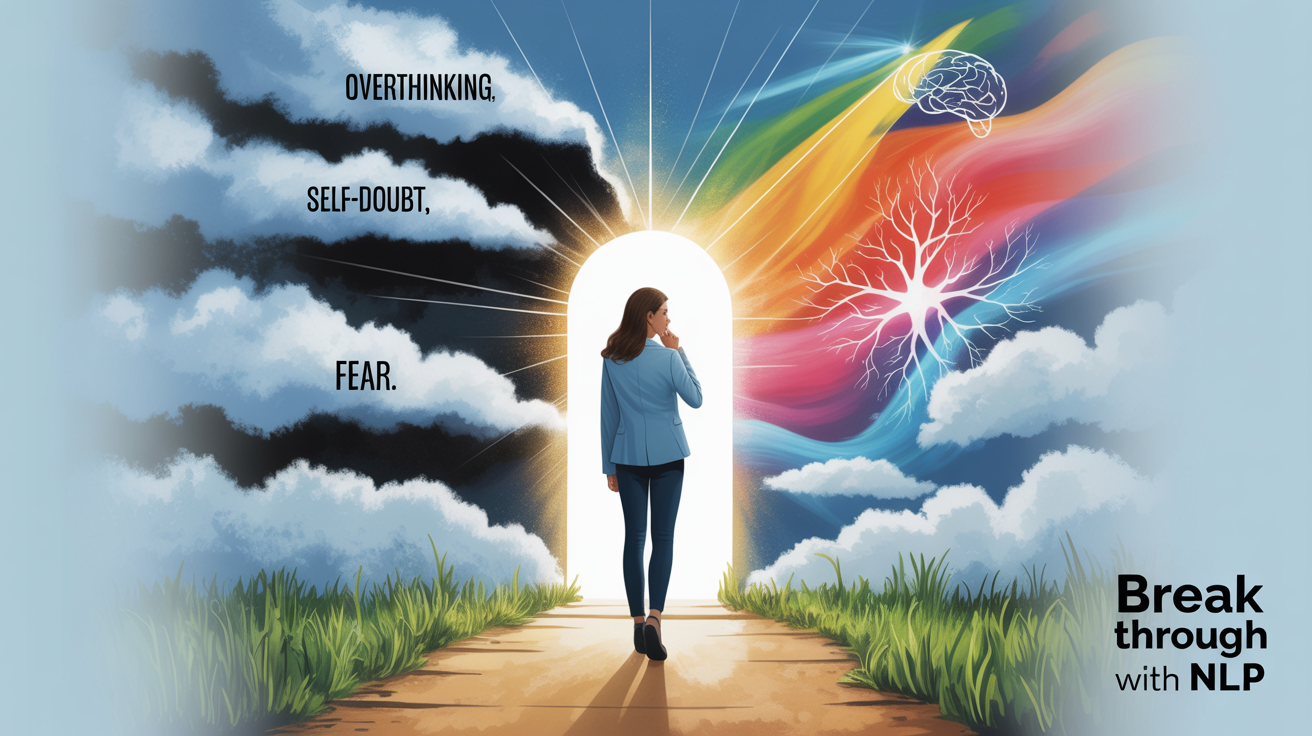
You’ve been thinking about making a change, maybe in your career, your relationships, or even within yourself, but the moment you get close to taking action…
Your mind kicks into overdrive.
You replay the same scenario in your head again and again.
You imagine everything that could go wrong.
You compare yourself to others.
You doubt your abilities, your timing, your readiness.
A small whisper inside says, “What if you fail?”
Another says, “You’re not ready.”
And a deeper one, barely audible, says, “Who do you think you are?”
Overthinking. Self-doubt. Fear.
They feel so rational… yet they steal so many dreams.
If you’ve ever felt like your mind is working against you instead of for you, you’re not alone, and more importantly, there is a way to break free from this inner loop for good.
This is where NLP, Neuro-Linguistic Programming, becomes one of the most powerful tools you will ever use.

You started your NLP journey for a reason.
Maybe it was the desire to help people change their lives.
Maybe it was to discover who you truly are beneath all the roles you’ve played.
And at first, it was exhilarating, every technique you learned opened doors to new possibilities.
But somewhere between finishing your certification and starting your practice, something shifted. The passion that once lit you up has dimmed. The purpose that once felt crystal clear now feels… fuzzy.
If that sounds familiar, you’re not alone.
Every great practitioner reaches this crossroads, where the skills are there, but the spark is missing.
The truth is: your purpose hasn’t disappeared.
It’s simply evolved.
And Master-Level NLP is where you realign your work with the deeper calling that led you here in the first place.

In today's fast-paced environment, making genuine connections can be challenging. Conversational hypnosis offers a unique approach to bridge this gap. This technique enhances communication, allowing for deeper, more meaningful relationships.
Conversational hypnosis stems from the work of Milton H. Erickson, a pioneer in the field of hypnotherapy. Unlike traditional hypnosis, which often involves a formal trance, conversational hypnosis occurs in everyday interactions. It focuses on subtle language cues and psychological principles to influence others without them realizing it.
The purpose of conversational hypnosis is not to manipulate but to enhance communication. By understanding how people process information subconsciously, you can create more effective and authentic interactions. This approach is particularly valuable for coaches, influencers, and professionals seeking to elevate their communication skills.
This Blog
Subscribe
Bookmark This Page
Recent Posts
Recent Posts
Categories
