
Enter Your Email to Be Notified When Discounted Tickets Become Available
Enter Your Email to Be Notified When Discounted Tickets Become Available

Have you ever felt like you’ve read the books, listened to the podcasts, watched the videos, and tried to stay positive…
…but somehow, you still find yourself repeating the same patterns?
You want to grow.
You want to feel more confident.
You want to respond differently.
You want to stop overthinking, stop doubting yourself, and stop falling back into the same emotional habits.
And yet, when life happens, the old version of you shows up again.
The same reaction.
The same fear.
The same inner voice.
The same pattern you thought you were done with.
If that sounds familiar, here’s something important to understand:
You are not lazy.
You are not broken.
You are not failing at personal growth.
You may simply be missing a practical way to work with the mind.
And that is where one beginner-friendly personal growth tool can open a whole new path.
It’s called Neuro-Linguistic Programming, or NLP.
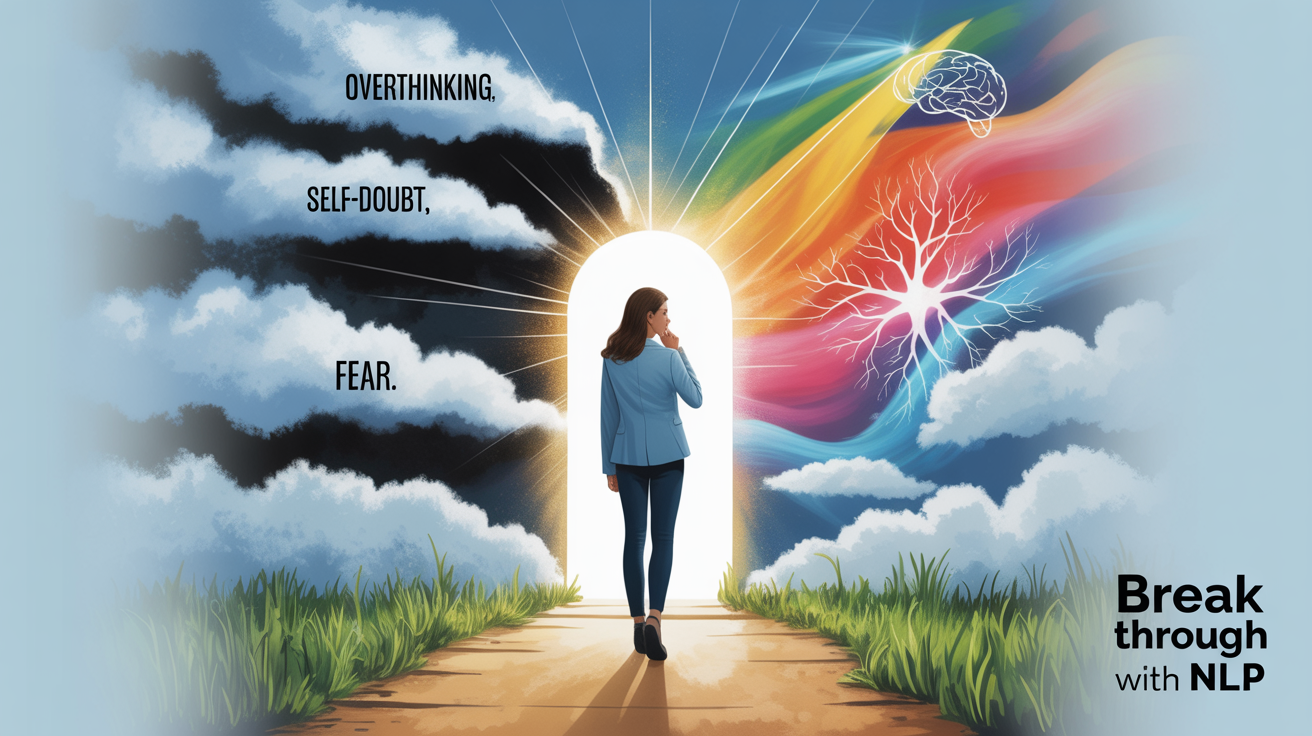
You’ve been thinking about making a change, maybe in your career, your relationships, or even within yourself, but the moment you get close to taking action…
Your mind kicks into overdrive.
You replay the same scenario in your head again and again.
You imagine everything that could go wrong.
You compare yourself to others.
You doubt your abilities, your timing, your readiness.
A small whisper inside says, “What if you fail?”
Another says, “You’re not ready.”
And a deeper one, barely audible, says, “Who do you think you are?”
Overthinking. Self-doubt. Fear.
They feel so rational… yet they steal so many dreams.
If you’ve ever felt like your mind is working against you instead of for you, you’re not alone, and more importantly, there is a way to break free from this inner loop for good.
This is where NLP, Neuro-Linguistic Programming, becomes one of the most powerful tools you will ever use.

You started your NLP journey for a reason.
Maybe it was the desire to help people change their lives.
Maybe it was to discover who you truly are beneath all the roles you’ve played.
And at first, it was exhilarating, every technique you learned opened doors to new possibilities.
But somewhere between finishing your certification and starting your practice, something shifted. The passion that once lit you up has dimmed. The purpose that once felt crystal clear now feels… fuzzy.
If that sounds familiar, you’re not alone.
Every great practitioner reaches this crossroads, where the skills are there, but the spark is missing.
The truth is: your purpose hasn’t disappeared.
It’s simply evolved.
And Master-Level NLP is where you realign your work with the deeper calling that led you here in the first place.

If you’ve ever read the books, joined the retreats, or downloaded the mindfulness apps, yet still found yourself slipping back into the same old patterns, you’re not alone.
So many people start their personal growth journey full of hope, only to feel the excitement fade a few weeks later. The retreat high wears off. The affirmations lose their spark. The old self-doubt and fears creep back in.
It can leave you wondering: “Is real change even possible for me?”
The truth is, it absolutely is. But most personal growth approaches miss the one thing that truly makes transformation stick: rewiring your subconscious mind.
In this article, we’ll explore why traditional methods often fail, and how Neuro-Linguistic Programming (NLP) can help you finally break free.
You’ll also hear real stories of transformation, and discover why the upcoming Create Your Life: Live NLP Experience may be the breakthrough you’ve been waiting for.

In today's fast-paced life, achieving a work-life balance can be challenging. Many feel overwhelmed by the demands of their careers and personal lives. Neuro-Linguistic Programming (NLP) offers a powerful solution. By setting effective goals, NLP helps promote harmony between work and personal fulfillment.
Work-life balance is essential for mental well-being and personal satisfaction. It ensures that neither work nor personal life suffers due to neglect. NLP, a method for personal change, can aid in achieving this balance. By using NLP, individuals can set clear and achievable goals that align with their values and desires.
NLP focuses on understanding how the mind and language influence behavior. It provides tools to manage thoughts and emotions effectively. By applying NLP techniques, one can set goals that support a balanced life, reducing stress and enhancing satisfaction.
NLP introduces a structured way to set and achieve goals. Visualization is a key technique in NLP. It involves imagining the desired outcome vividly, which helps in making it a reality. This method increases motivation and clarity in goal pursuit.
Language patterns in NLP also play a significant role. The way we talk to ourselves can influence our actions. By using positive language, we can boost confidence and drive. Anchoring, another NLP technique, allows individuals to evoke positive states of mind by associating them with specific triggers.

Impostor syndrome is a common struggle for many, especially in leadership and creative roles. It creates self-doubt and hinders personal and professional growth. Overcoming this barrier is vital to embracing authentic confidence.
Hypnotherapy offers a promising solution, helping individuals regain self-assurance and integrity. This article explores how hypnotherapy can eliminate self-doubt, empowering you to inspire others.
Impostor syndrome creates a cycle of self-doubt and insecurity. Even high achievers feel they lack true competence. Symptoms include fear of failure, perfectionism, and attributing success to luck. These feelings can cripple creativity and leadership. Many misunderstand impostor syndrome, believing it's just a lack of confidence. However, addressing these feelings is crucial for personal and professional growth.
Leaders and creatives are particularly vulnerable. The pressure to innovate and lead can amplify feelings of inadequacy. Misconceptions about impostor syndrome often prevent individuals from seeking help. Understanding its impact is the first step toward overcoming it. Awareness is essential to break free from the cycle of self-doubt.
This Blog
Subscribe
Bookmark This Page
Recent Posts
Recent Posts
Categories
