
Enter Your Email to Be Notified When Discounted Tickets Become Available
Enter Your Email to Be Notified When Discounted Tickets Become Available

You’ve worked hard. You’ve grown. You’ve accomplished things that an earlier version of you may have once thought were impossible.
So why can it still feel like you’re not good enough?
Why can someone praise your work and, within seconds, your mind finds a reason the compliment doesn’t really count?
Why can you achieve the goal, get the opportunity, earn the recognition, and still wonder whether you truly deserve to be there?
If you’ve ever experienced this disconnect between what you’ve accomplished and how you feel about yourself, there may be more happening beneath the surface than a simple lack of confidence.
And understanding that difference could change the way you see yourself.
This is for you if you’ve accomplished meaningful things, yet somehow still feel less capable than other people seem to think you are.
It’s for you if you keep raising the bar because reaching the last goal never created the confidence you expected.
And it’s for you if you can easily recognize someone else’s strengths while struggling to fully acknowledge your own.
This isn’t about pretending you’re perfect.
It isn’t about convincing yourself that you never need to improve.
It’s about understanding why your internal picture of yourself may not have caught up with the person you’ve already become.
You’ve done the work.
You’ve put in the hours.
You’ve built the skills.
You’ve earned the opportunities.
From the outside, it looks like progress.
But inside? There’s a different story.
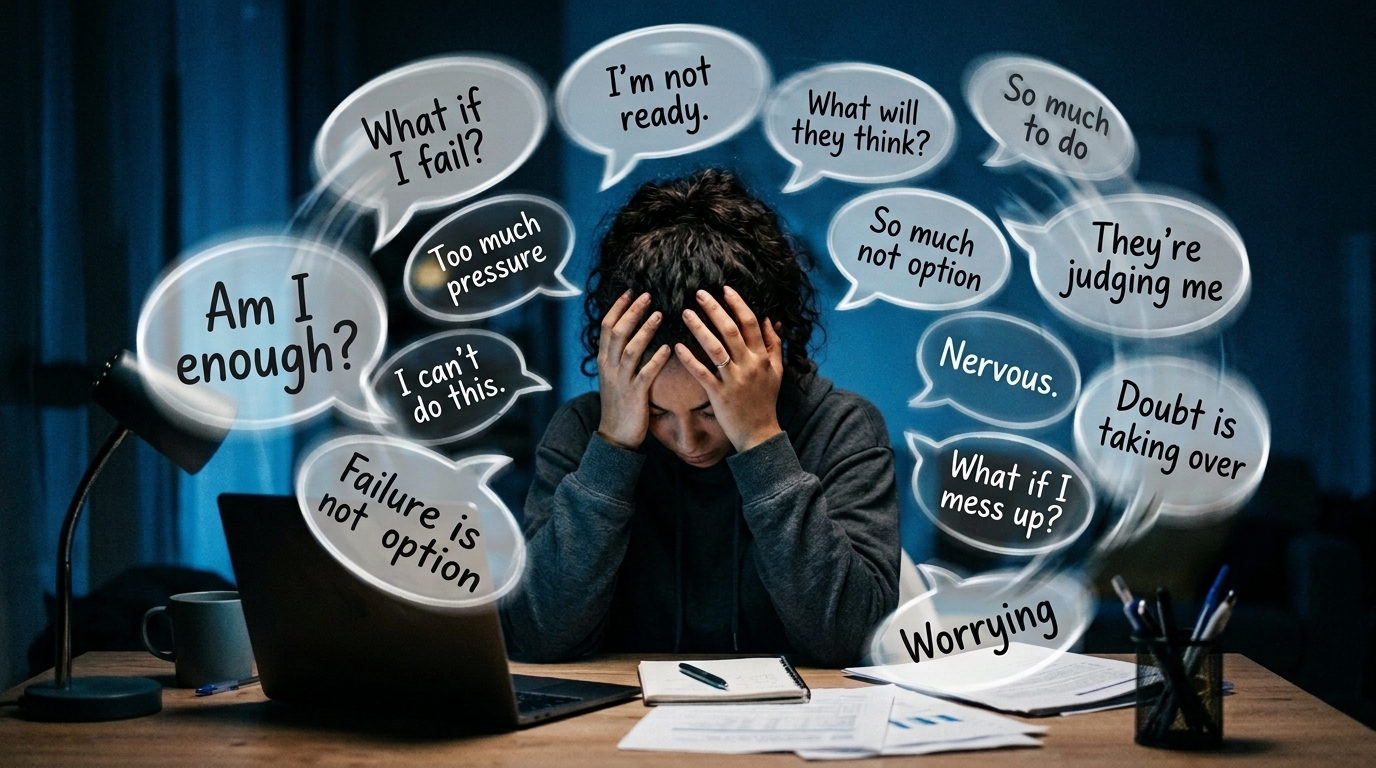
A quiet voice that questions everything.
“What if I’m not actually good enough?”
“What if I mess this up?”
“What if they realize I don’t belong here?”
So you prepare more than necessary.
You hesitate when it matters most.
You downplay your wins.
You hold back, just enough to stay “safe.”
If this feels familiar, you’re not broken.
You’re experiencing something incredibly common.
Impostor syndrome.
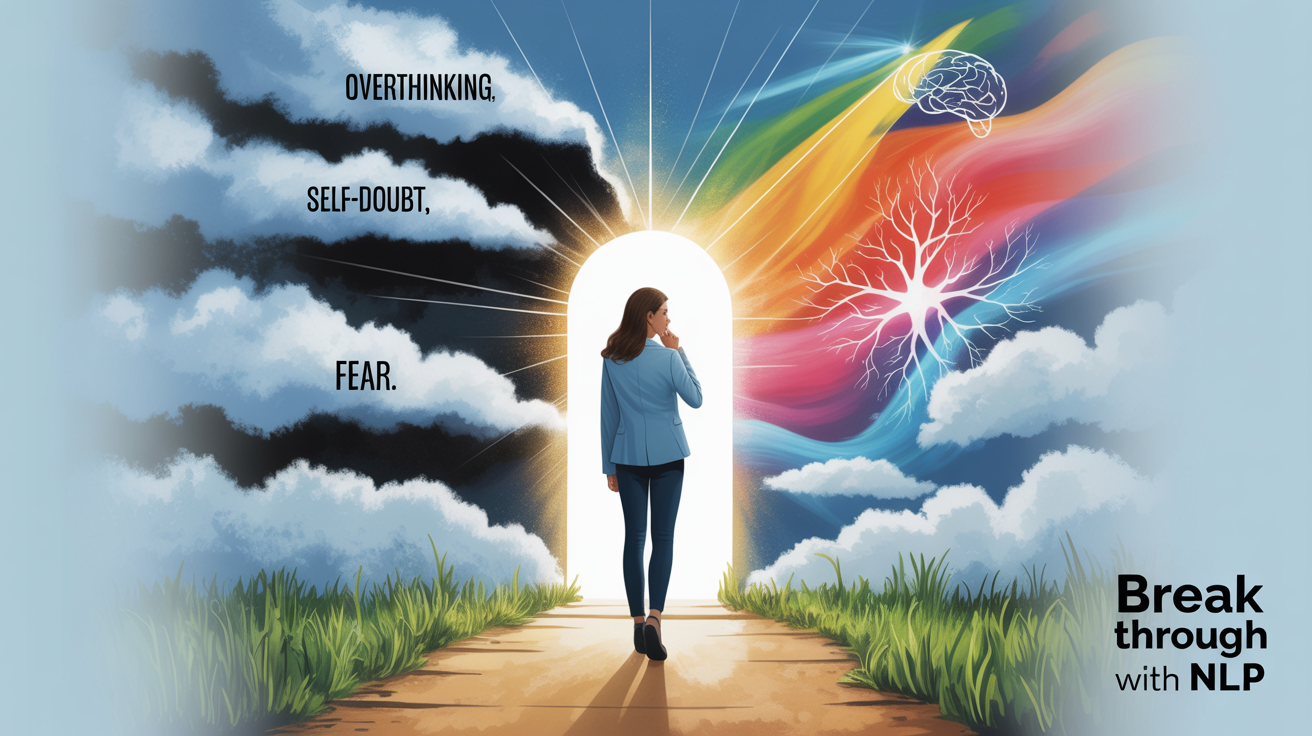
You’ve been thinking about making a change, maybe in your career, your relationships, or even within yourself, but the moment you get close to taking action…
Your mind kicks into overdrive.
You replay the same scenario in your head again and again.
You imagine everything that could go wrong.
You compare yourself to others.
You doubt your abilities, your timing, your readiness.
A small whisper inside says, “What if you fail?”
Another says, “You’re not ready.”
And a deeper one, barely audible, says, “Who do you think you are?”
Overthinking. Self-doubt. Fear.
They feel so rational… yet they steal so many dreams.
If you’ve ever felt like your mind is working against you instead of for you, you’re not alone, and more importantly, there is a way to break free from this inner loop for good.
This is where NLP, Neuro-Linguistic Programming, becomes one of the most powerful tools you will ever use.

Impostor syndrome is a common struggle for many, especially in leadership and creative roles. It creates self-doubt and hinders personal and professional growth. Overcoming this barrier is vital to embracing authentic confidence.
Hypnotherapy offers a promising solution, helping individuals regain self-assurance and integrity. This article explores how hypnotherapy can eliminate self-doubt, empowering you to inspire others.
Impostor syndrome creates a cycle of self-doubt and insecurity. Even high achievers feel they lack true competence. Symptoms include fear of failure, perfectionism, and attributing success to luck. These feelings can cripple creativity and leadership. Many misunderstand impostor syndrome, believing it's just a lack of confidence. However, addressing these feelings is crucial for personal and professional growth.
Leaders and creatives are particularly vulnerable. The pressure to innovate and lead can amplify feelings of inadequacy. Misconceptions about impostor syndrome often prevent individuals from seeking help. Understanding its impact is the first step toward overcoming it. Awareness is essential to break free from the cycle of self-doubt.
This Blog
Subscribe
Bookmark This Page
Recent Posts
Recent Posts
Categories
