
Enter Your Email to Be Notified When Discounted Tickets Become Available
Enter Your Email to Be Notified When Discounted Tickets Become Available

You set the goal because you wanted something better.
More freedom. A successful business. A healthier body. A career you're proud of. A life that feels more meaningful.
At first, the goal excited you. You imagined what your life might look like once you achieved it. You felt motivated, hopeful, and ready to make a change.
But somewhere along the way, that excitement began turning into pressure.
Instead of feeling inspired, you started feeling behind. Instead of celebrating your progress, you focused on everything you hadn't accomplished. And instead of feeling closer to the future you imagined, you began wondering whether you'd ever get there.
Why do the goals that once inspired us sometimes become the very things that frustrate us?
The answer may have less to do with how badly you want something and more to do with how you're approaching the journey.
Understanding this difference can help you pursue meaningful goals with greater clarity, more realistic expectations, and less unnecessary pressure.
This may sound familiar.
You decide to improve your health, so you create a new exercise routine. You want to grow your business, so you map out an ambitious plan. You want to develop a new skill, so you promise yourself you'll practice every day.
For a while, everything feels possible.
Then life happens.
You miss a workout. An unexpected expense disrupts your plans. A project takes longer than expected. You make less progress in a month than you hoped to make in a week.
Suddenly, the goal that once excited you becomes a reminder of everything you're not doing.
You start thinking, I'm falling behind.
Maybe you tell yourself you need more discipline. Perhaps you decide you're not trying hard enough.
But what if the problem isn't simply a lack of motivation?
What if your expectations, your plan, or the meaning you've attached to the goal are making the process harder than it needs to be?
If you've experienced this, you're not alone. And you don't necessarily need to abandon your ambitions to change the experience.

You’ve worked hard. You’ve grown. You’ve accomplished things that an earlier version of you may have once thought were impossible.
So why can it still feel like you’re not good enough?
Why can someone praise your work and, within seconds, your mind finds a reason the compliment doesn’t really count?
Why can you achieve the goal, get the opportunity, earn the recognition, and still wonder whether you truly deserve to be there?
If you’ve ever experienced this disconnect between what you’ve accomplished and how you feel about yourself, there may be more happening beneath the surface than a simple lack of confidence.
And understanding that difference could change the way you see yourself.
This is for you if you’ve accomplished meaningful things, yet somehow still feel less capable than other people seem to think you are.
It’s for you if you keep raising the bar because reaching the last goal never created the confidence you expected.
And it’s for you if you can easily recognize someone else’s strengths while struggling to fully acknowledge your own.
This isn’t about pretending you’re perfect.
It isn’t about convincing yourself that you never need to improve.
It’s about understanding why your internal picture of yourself may not have caught up with the person you’ve already become.
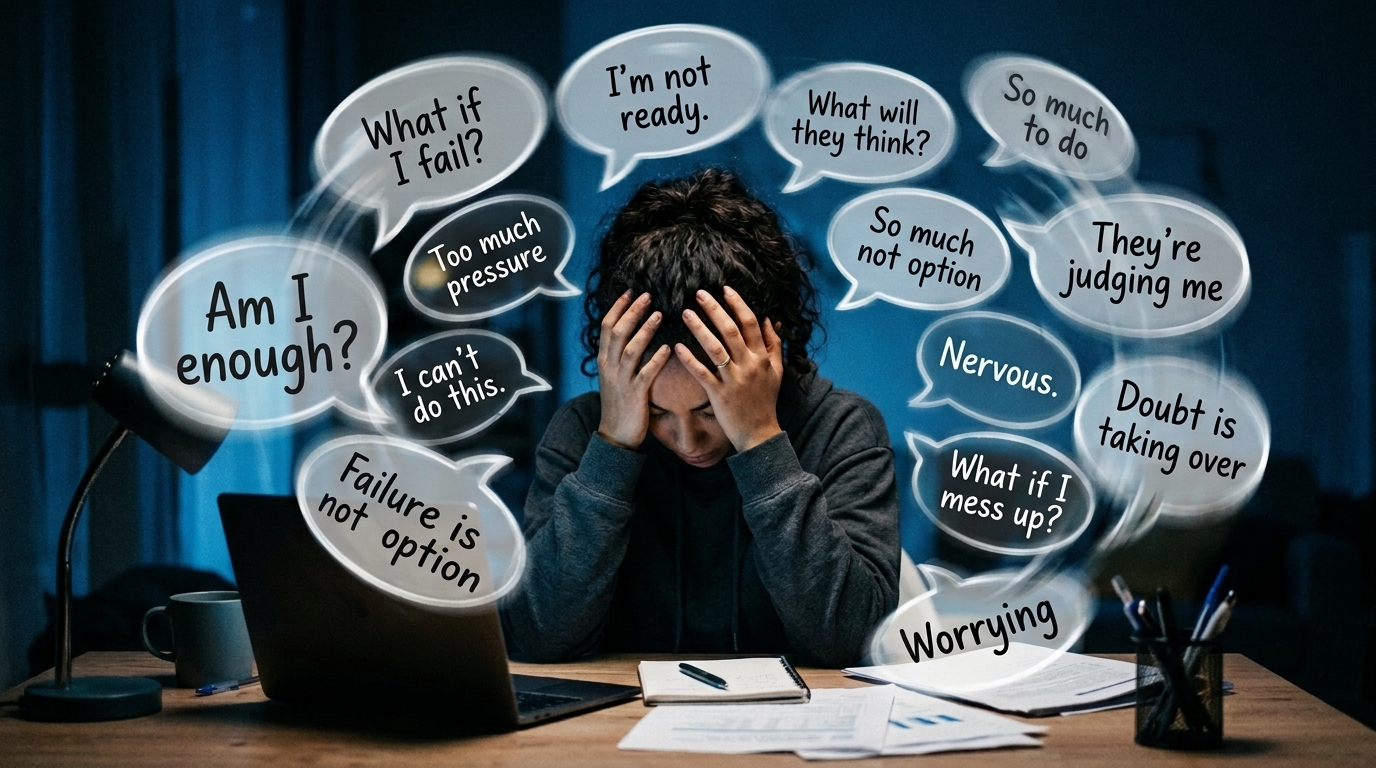
You’ve done the work.
You’ve put in the hours.
You’ve built the skills.
You’ve earned the opportunities.
From the outside, it looks like progress.
But inside? There’s a different story.
A quiet voice that questions everything.
“What if I’m not actually good enough?”
“What if I mess this up?”
“What if they realize I don’t belong here?”
So you prepare more than necessary.
You hesitate when it matters most.
You downplay your wins.
You hold back, just enough to stay “safe.”
If this feels familiar, you’re not broken.
You’re experiencing something incredibly common.
Impostor syndrome.
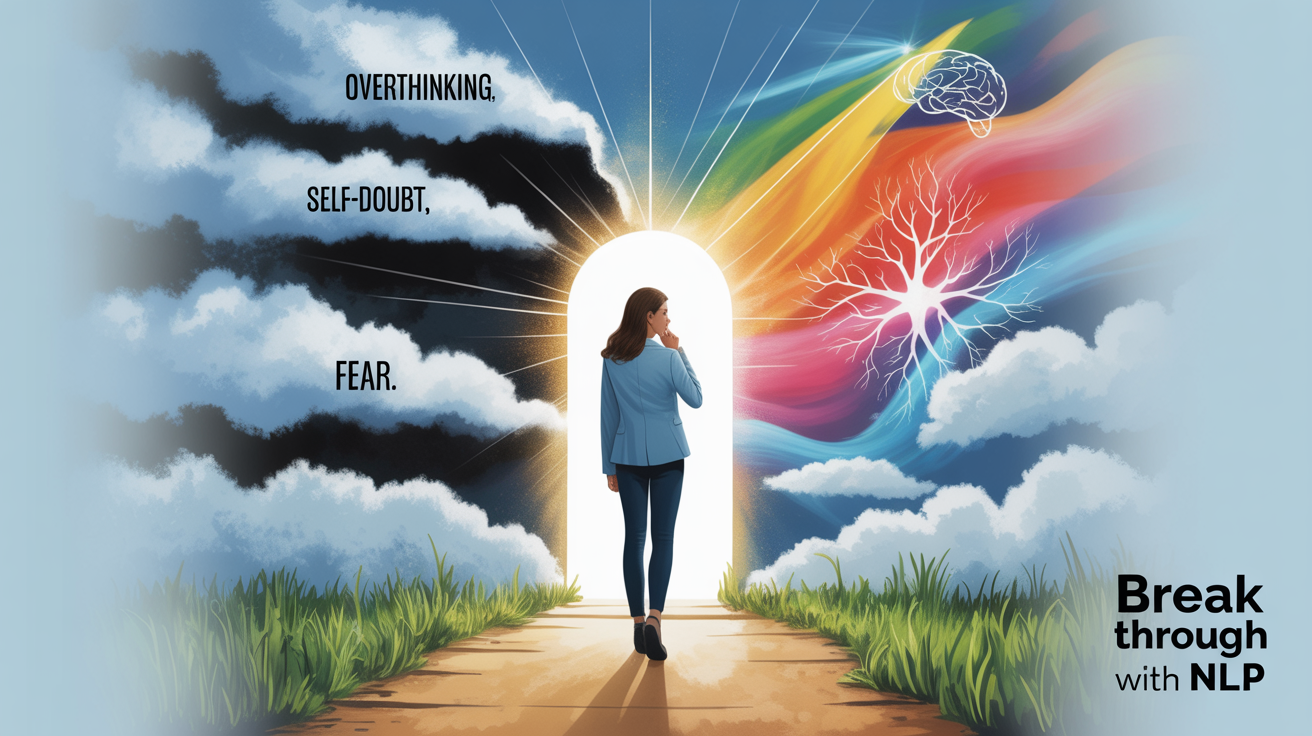
You’ve been thinking about making a change, maybe in your career, your relationships, or even within yourself, but the moment you get close to taking action…
Your mind kicks into overdrive.
You replay the same scenario in your head again and again.
You imagine everything that could go wrong.
You compare yourself to others.
You doubt your abilities, your timing, your readiness.
A small whisper inside says, “What if you fail?”
Another says, “You’re not ready.”
And a deeper one, barely audible, says, “Who do you think you are?”
Overthinking. Self-doubt. Fear.
They feel so rational… yet they steal so many dreams.
If you’ve ever felt like your mind is working against you instead of for you, you’re not alone, and more importantly, there is a way to break free from this inner loop for good.
This is where NLP, Neuro-Linguistic Programming, becomes one of the most powerful tools you will ever use.

In today's fast-paced environment, achieving true transformation requires more than mere motivation.
It calls for a deep understanding of how our minds work. Neuro-Linguistic Programming (NLP) offers techniques to help you do just that.
By mastering mindset, you can unlock personal and professional success. This article explores how the Create Your Life: Live NLP Experience can guide you on this journey.
NLP is a method that combines neuroscience, linguistics, and psychology. It aims to improve communication and change behavior. Originating in the 1970s, Richard Bandler and John Grinder created NLP to understand how successful individuals achieve their results. They observed experts and formulated strategies that others could follow.
The core idea of NLP is that our thoughts, language, and behaviors are interconnected. By changing one, we can influence the others.
Techniques like reframing, anchoring, and modeling help individuals break free from limiting beliefs. These methods can alter how we perceive challenges and opportunities.
The potential impact of NLP on mindset is profound. It empowers people to take control of their lives by reshaping their internal dialogues. This leads to improved decision-making and enhanced personal growth.
This Blog
Subscribe
Bookmark This Page
Recent Posts
Recent Posts
Categories
